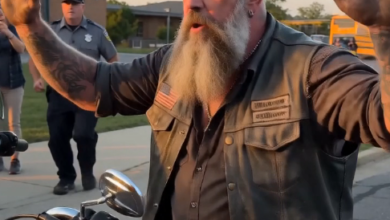
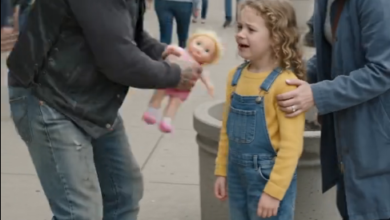
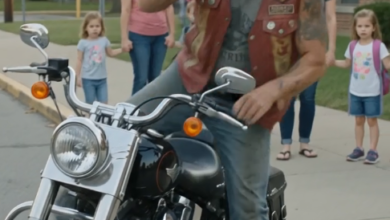
Part 2: A Tattooed Biker Dragged a Thirteen-Year-Old Boy Away from His Friends and Forced Him into a Truck — Until Police Learned Which Road His Uncle Was Trying to Stop Him From Taking
PART 2
Rook had noticed changes in Mateo for nearly two months, though he initially mistook them for ordinary signs of adolescence.
The boy stopped visiting the repair shop after school. He began wearing expensive sneakers without explaining where they came from, avoided looking at his mother whenever money was discussed, and started carrying a second phone that he claimed belonged to a friend.
His grades fell.
He missed two days of school.
When his mother, Elena, asked where he had been, Mateo became angry enough to frighten his younger sister.
Elena was Rook’s forty-four-year-old younger sister, a Latina American single mother who worked early shifts at a rehabilitation center and cleaned offices three nights each week.
She loved her son fiercely.
Love did not give her enough hours to watch every door he entered.
Mateo’s father had disappeared when the boy was six, leaving behind irregular phone calls and promises that arrived more often than actual support. Mateo rarely admitted how much the abandonment hurt him, but Rook noticed the way his nephew watched older boys who appeared respected, well dressed, and surrounded by people.
The Jefferson Avenue group knew how to recognize that hunger.
They did not approach Mateo by discussing prison, violence, or drugs. They offered food, rides, attention, and the language of brotherhood.
They told him he was mature.
They told him his family did not understand him.
They gave him small amounts of money for harmless-looking favors, then slowly moved the boundary of what counted as harmless.
Rook recognized the pattern because it had once worked on him.
At sixteen, he believed the older boys who welcomed him into their circle were giving him a family. At seventeen, he was transporting things he refused to name. At nineteen, he was using the same substances he had once helped others move.
By twenty-three, Rook was serving a prison sentence and missing the early childhood of his son, Adrian.
Adrian’s mother eventually moved away.
Rook sent letters.
Most came back unopened.
He had carried that loss for decades.
When Elena told him Mateo had begun disappearing after school, Rook did not immediately confront the boy. He contacted a community youth counselor, spoke with a school liaison, and began driving past the areas Mateo frequented.
He wanted evidence before accusation.
On that Friday evening, he found more than evidence.
He found Mateo standing exactly where Rook himself had stood thirty-six years earlier, listening to promises made by people who benefited from children believing danger was loyalty.
PART 3
Police ordered Rook to step away from the truck.
He complied immediately.
Officer Lena Brooks, a forty-one-year-old Black American woman with dark brown skin, close-cropped hair, and a navy uniform, approached the passenger side while her partner spoke with the witnesses.
Mateo remained furious.
“He grabbed me.”
“Is he your uncle?” Lena asked.
“Yes, but I didn’t want to go.”
Rook did not interrupt.
The distinction mattered.
Being family did not automatically justify using physical force, even when fear made the decision understandable.
Lena asked Rook to explain what happened.
He described the older teenagers, the envelope, the words he heard, and the call to Elena. His phone still displayed the active call history.
Elena arrived less than five minutes later, breathing heavily after leaving work early.
She confirmed Rook’s identity and told officers about Mateo’s recent behavior.
The sealed envelope remained on the truck’s dashboard.
Rook had not opened it.
He handed it to Lena.
Inside was cash and a written address, along with instructions directing Mateo to wait outside a building and send a message when a particular vehicle arrived.
There were no substances inside the envelope.
The assignment itself was designed to keep the youngest participant away from the most obvious evidence.
Lena had seen the pattern before.
Children were often given tasks that appeared minor, allowing older teenagers and adults to deny what they were drawing them toward.
She contacted a youth investigations officer and documented the names of the boys witnesses had recorded.
Mateo looked at the money.
“I wasn’t selling anything.”
Rook answered before anyone else could shame him.
“Not tonight.”
“That’s not what they said.”
“They never tell you the final cost on the first day.”
Mateo turned toward his mother.
“You think I’m a criminal now?”
Elena’s face broke.
“I think you’re thirteen.”
The anger left Mateo’s expression for a moment.
Officer Brooks asked whether he felt safe returning home. Mateo said yes, though he did not want to leave with Rook.
That answer was respected.
Elena drove him home.
Rook followed in his pickup after officers released him.
Before they separated, Lena spoke privately with Rook.
“You may have recognized danger, but grabbing him created another frightening situation.”
“I know.”
“Next time, call us before it reaches that point.”
Rook looked toward Mateo.
“If I have enough time, I will.”
It was not a proud answer.
It was an honest one.
PART 4
The confrontation at home lasted nearly two hours.
Mateo accused Rook of humiliating him, ruining his reputation, and treating him like a child.
Rook did not remind him that he was legally a child.
Instead, he sat at the kitchen table and allowed the anger to arrive.
“You made me look weak,” Mateo said.
“To whom?”
“My friends.”
“Are they your friends if your safety makes you less useful to them?”
Mateo looked away.
“You don’t know them.”
“I knew their promises before they were born.”
That response only made the boy angrier.
“You think because you went to prison, everybody is you.”
“No.”
Rook folded his hands across the table.
“I think because I went to prison, I recognize the parts people leave out when they recruit someone younger.”
Elena placed the cash from the envelope inside an evidence bag officers had given her. The money looked painfully large beside the unpaid utility notice on the refrigerator.
Mateo noticed.
“They said I could help Mom.”
Elena sat beside him.
“I need help, baby. I do not need money that makes me wonder whether you’ll come home.”
“I would’ve been careful.”
Rook lowered his voice.
“I thought careful meant never using what I carried. Then I thought careful meant never asking questions. Eventually careful meant hoping the police stopped someone else.”
Mateo studied the scars across his uncle’s knuckles.
“Did anybody try to pull you out?”
“One person.”
“Who?”
“My older sister.”
Elena looked down.
She had been eleven when Rook first disappeared into the street life that consumed him. She remembered hiding his shoes, crying at the door, and asking their mother to make him stay home.
“I didn’t listen,” Rook continued. “Then she spent years thinking she had failed me.”
Mateo glanced toward his mother.
The story had shifted.
His uncle’s past was no longer a dramatic warning delivered by an adult. It was part of the burden Elena had carried before Mateo was born.
Rook placed his garage keys on the table.
“I’m not asking you to trust one speech.”
“What are you asking?”
“Come to the shop tomorrow.”
“I don’t know anything about motorcycles.”
“Neither did I before someone taught me.”
“You going to watch me all day?”
“Yes.”
Mateo rolled his eyes.
Rook continued.
“And I’ll pay you for real work, with money your mother can see and taxes attached.”
Elena almost smiled.
Mateo did not.
“What if I say no?”
“Then we find another safe plan with the counselor. But you’re not going back to that corner.”
Mateo hated the answer.
He came to the garage anyway.
PART 5
Rook did not begin by placing Mateo beside an expensive motorcycle.
He handed him a broom.
Mateo stared at it.
“You said you’d teach me repairs.”
“I said I’d give you work.”
“This isn’t mechanic work.”
“Every shop that survives begins with somebody cleaning what everyone else leaves behind.”
Mateo swept badly and with visible resentment.
Rook made him repeat the corners.
During the second hour, he taught Mateo how to organize sockets by size, identify damaged tools, and record parts removed from a motorcycle so nothing disappeared during reassembly.
There were rules.
No phones near active machinery.
No touching a customer’s motorcycle without permission.
No pretending to understand instructions.
If Mateo did not know, he had to ask.
“That rule is stupid,” Mateo said.
“That rule keeps mistakes small.”
The sentence followed Mateo for years.
During the first week, he swept, cleaned parts, and watched Rook repair brakes. During the second, he learned to check tire pressure, battery connections, fluid levels, and chain tension under direct supervision.
Rook paid him every Friday.
The amount was modest.
The envelope contained a written record of hours and taxes.
Mateo complained that the Jefferson boys paid more for less work.
Rook nodded.
“They were paying for the part of you they planned to use.”
“And you aren’t?”
“I’m paying for work. You remain yours.”
Mateo kept returning.
Partly for money.
Partly because the garage gave him somewhere to exist without defending himself.
The Iron Guardians Motorcycle Club treated him as Rook’s apprentice, not as a troubled child requiring constant speeches. They corrected him when he became careless and thanked him when his work helped.
Luis “Doc” Ramirez, a fifty-four-year-old Latino American former paramedic, taught him basic first aid.
Denise “Red” Morgan, a sixty-year-old white American retired accountant, showed him how to calculate labor time and why cash without records often disappeared faster than it arrived.
Mateo discovered he was good at electrical diagnostics.
He could follow wiring diagrams patiently, find loose connections, and remain focused when others became frustrated.
Rook noticed but did not exaggerate the praise.
“You found it.”
“That’s all?”
“What do you want, a parade?”
“Maybe.”
“Find three more problems and we’ll discuss balloons.”
Mateo laughed despite himself.
It was the first time Rook had heard that sound since the street corner.
PART 6
Leaving the Jefferson group was not as simple as refusing another envelope.
Messages arrived.
Some mocked Mateo for hiding behind his uncle. Others reminded him of money he had accepted and favors they claimed he owed.
Rook saved every message.
He did not answer on Mateo’s behalf.
Together with Elena, Officer Brooks, the school liaison, and youth counselor Marcus Hill, they created a safety plan.
Mateo changed routes after school.
Teachers knew who could collect him.
The repair shop installed better exterior lighting and cameras. The Iron Guardians were instructed not to confront the older teenagers or turn the situation into a street conflict.
Rook made the rule personally.
“We protect Mateo by making his world safer, not by giving those boys a war story.”
The older group eventually lost interest as police investigations and community interventions focused attention on their activities.
Two members were arrested on unrelated charges.
Another entered a diversion program.
Mateo struggled with guilt when he learned that one boy had been injured after he left.
“They said I abandoned them.”
Rook sat beside him on the garage floor.
“People using you will call boundaries betrayal.”
“What if I could’ve helped?”
“You were thirteen.”
“So?”
“So rescuing older boys from choices they made was never your job.”
Mateo picked at grease beneath his fingernails.
“Was saving me your job?”
Rook considered the question carefully.
“Pulling you into the truck was one moment. Staying after you hated me was the job.”
Mateo looked toward the motorcycle on the lift.
“Did you really lose your son?”
“Yes.”
“Does he know you changed?”
“I don’t know.”
“Why don’t you call him?”
“He asked me not to.”
Mateo understood silence differently after that.
Rook had not repaired every relationship simply because he stopped using substances and left prison. Some consequences remained.
“You teach me all this because you couldn’t teach him?”
“Partly.”
“That’s messed up.”
“It is.”
“At least you’re honest.”
Rook looked at his nephew.
“I cannot use you to replace my son. But I can refuse to abandon another boy because my past makes me uncomfortable.”
Mateo nodded slowly.
Then he pointed beneath the motorcycle.
“You missed a loose connector.”
Rook examined it.
Mateo was right.
“Do not become arrogant.”
“You said to find three more problems.”
“That was not a binding contract.”
PART 7
Mateo worked at Mercer Cycle and Motor throughout high school.
His first paychecks helped with groceries, but Elena required him to save part of everything he earned. Red helped him open a supervised account and taught him how interest, taxes, and credit worked.
The lessons lacked the excitement of quick cash.
They produced something better.
Choices.
At sixteen, Mateo purchased his first used car with money he could explain. It was dented, loud, and needed more repairs than Rook believed reasonable.
“You bought a mechanical complaint.”
“You ride a forty-year-old Harley.”
“That motorcycle has character.”
“My car has character.”
“Your car has three warning lights.”
They rebuilt it together.
Mateo graduated high school with certification credits in automotive technology and later entered an electrical systems apprenticeship.
He never became a perfect young man.
He argued with his mother, made reckless decisions, and once lost his job after repeatedly arriving late. Rook refused to repair that consequence for him.
“I thought you were supposed to help.”
“I am helping by not calling your supervisor with excuses.”
Mateo found another job.
He arrived early.
Years later, the video from Jefferson Avenue resurfaced online. The original recording showed Rook pulling a struggling thirteen-year-old toward a truck while people shouted that he was abducting him.
The clip ended before police arrived or the envelope was examined.
Commenters judged ten seconds.
Mateo, now twenty-four, posted the fuller explanation himself.
That biker was my uncle. I hated him that night. I thought he was dragging me away from the only people who respected me. He was actually pulling me away from men who respected only what they could make me do.
He included a photograph taken inside the repair shop.
Mateo stood beside Rook holding his apprenticeship certificate. Elena stood between them, smiling through tears.
The post spread widely.
Reporters asked Rook whether he believed physically forcing Mateo into the truck had been justified.
Rook refused an easy heroic answer.
“I acted because I believed he was in immediate danger, but I also frightened him and everyone watching. The important part was not that I dragged him away once. The important part was that his mother, counselor, school, police, and community stayed involved afterward.”
“Would you do it again?”
Rook looked toward Mateo.
“I hope I would recognize the danger earlier and never need to.”
That answer mattered to Mateo.
His uncle did not turn one desperate decision into permission for adults to control children whenever they believed they knew best.
Rook understood that rescue without listening could become another form of harm.
What saved Mateo was not only being removed from the corner.
It was gaining somewhere else to go.
A workbench.
A paycheck.
A mentor who expected honesty.
A mother who refused to confuse love with silence.
A counselor who allowed anger without accepting self-destruction.
A community that offered belonging without demanding illegal loyalty in return.
When Rook turned sixty-five, he transferred partial ownership of the garage to Mateo. The contract required years of payments because Rook refused to disguise business as a sentimental gift.
Mateo signed every page.
“You checked the numbers?” Rook asked.
“Twice.”
“You understand the debt?”
“Yes.”
“You can still walk away.”
Mateo smiled.
“You spent years teaching me to know what I’m signing.”
The older biker looked toward the street where his nephew had once stood with an envelope in his hand.
“I should have learned that younger.”
“You learned in time to teach me.”
Rook turned away because tears had entered his eyes.
Mateo pretended not to notice.
Above the main workbench hung the black helmet Rook wore on the night of the rescue. Beneath it was a small metal plaque engraved with one sentence:
HE PULLED ME FROM THE MISTAKE HE ONCE MADE.
Customers often assumed the words referred to a motorcycle accident.
Mateo rarely corrected them.
The real accident had been waiting on a street corner, disguised as money, attention, and belonging.
Rook saw it coming because he still carried the wreckage of his own choices.
He could not return to the past and pull his younger self away.
He could not reclaim the childhood he missed with his son.
But when he saw his nephew standing at the entrance to the same road, he refused to keep riding.
He stopped.
He crossed the street.
And then, long after the witnesses lowered their phones, he stayed.
Follow this page for more unforgettable biker stories about second chances, chosen responsibility, and the people who turn their deepest regrets into a safer road for someone younger.